Showing posts with label Random Musings. Show all posts

Monday, April 27, 2015

It's Monday, April 27--What Are You Reading?

Good morning, fellow readers.

I just finished this book, and . . . wow.

Sara Taylor's debut novel, The Shore, is a quite a read . . . I'll post a review closer to the publication date (May 26). I'll just say for now that if this book is not on your radar yet, consider yourself notified!

I'm currently reading this book . . .

Tania James' novel, The Tusk That Did the Damage, released in March of this year, considers the moral complexities of the ivory trade in South India. James tells the story through the eyes of a poacher, a documentary filmmaker, and and an elephant known as the Gravedigger.

My most recent blog post was a discussion of Spring Releases I Can't Wait to Read. Let me know if any of these are on your list for the next few weeks, and what other spring releases have caught your attention!

I am recently returning to my blog after taking a few months off. I had a bit of an existential crisis as a book blogger--you know, what I am doing with this blog and why?! I think a lot of other book bloggers have experienced something similar. I became rather bored of posting only book reviews, which seem to generate very limited interest or conversation among other readers. But at the same time, I confess that I don't have the time or the creativity to generate much other book-related content.

So I took some time off . . . and I found that I really missed the conversation with other bloggers and book lovers. Therefore I'm back, for now, but this experience has led me to think that perhaps I should focus less on traditional-style book reviews and more on posting reaction pieces, mini reviews, or reading-related discussion topics (when I can think of them!). Have you struggled with similar issues in writing your blog, and if so, how have you handled them?

I wish everyone a happy reading week.

Friday, April 24, 2015

Spring New Releases I Can't Wait to Read

It's spring! The flower trees are blooming, the sun is shining (sometimes), the pollen is making me sneeze . . . and some lovely new novels are on the horizon!

Here are a few which have caught my eye and I can't wait read in the coming weeks . . .

Sara Taylor's debut novel, The Shore, will be published on May 26, and I think this novel of linked narratives looks intriguing. The stories center on women living on islands off the coast of Virginia's Chesapeake Bay . . . but a light beach read, this is NOT. From the publisher's synopsis: "These women struggle against domestic violence, savage wilderness, and the corrosive effects of poverty and addiction to secure a sense of well-being for themselves and for those they love." I read the first chapter last night, and it blew me away!

If you read Kate Atkinson's compelling 2013 novel Life After Life, you probably know that A God in Ruins is a sequel of sorts. This novel, to be published on May 5, is the story of Ursula's brother Teddy, the RAF pilot. Well, while I didn't absolutely LOVE Life After Life, I was certainly fascinated and challenged by it . . . and so, of course, A God in Ruins is one of the spring releases I am most anticipating.

Early Warning is the second installment of Jane Smiley's planned trilogy about the Langdon family. I love Jane Smiley, and I truly enjoyed Some Luck, her first novel about the Langdons (you can see my review of Some Luck here). Early Warning, which will be published on April 28, begins in 1953, as the family grieves the death of Walter. I look forward to finding out how the five Langdon children experience the turbulence and passion of America in the 1950s, 60s, and 70s.

If you like historical fiction, a new release for spring that might interest you is Sarah McCoy's The Mapmaker's Children, set for release on May 5. McCoy tells the stories of Sarah Brown, the daughter of abolitionist John Brown and a woman active in the Underground Railroad, and Eden, a modern woman anxious to conceive a child. The two women are linked by a house in West Virginia with secrets in the root cellar. (Confession--I read this one already! Review to come soon)

In the Unlikely Event is a new novel by Judy Blume . . . yes, THE Judy Blume! That's all you need to know--just buy it on June 2 and start reading! Seriously, though, that is pretty cool--a new novel for adults from 77-year-old Blume. It takes place in New Jersey in 1951-1952, as a series of passenger airlines crash in the same area within a three month period. I will certainly not miss this novel, but I will probably wait until July to read it (our family vacation in June involves airplane travel. Does this book sound like good airplane reading to you? Um, I'll wait a few weeks).

Do any of these new releases strike your fancy? What books are you looking forward to this spring?

Tuesday, April 21, 2015

Congratulations to Anthony Doerr, Winner of the 2015 Pulitzer Prize for Fiction

Yesterday, the Pulitzer Prize Board announced the winners of its literary and journalistic prizes for 2015. And the recipient of the 2015 Pulitzer Prize for Fiction is Anthony Doerr, for his novel All the Light We Cannot See. I'd like to congratulate Doerr for this honor . . . and recommend that you read the novel if you have not!

All the Light We Cannot See was one of my two favorite novels from 2014. I never wrote a review of it (as a book blogger, I experienced a bit of an existential crisis starting in December of last year and stopped posting . . . more on that later!). But my failure to review the novel in no way reflects my opinion of its worth. Doerr's novel is beautifully written, deeply engrossing, and emotionally engaging. It's a terrific example of what I like to call literary historical fiction--those books that tell a story from the past but bear the hallmarks of excellent writing and strong character development that are present in literary fiction. As you might be able to tell if you've read my blog, literary historical fiction is my very favorite kind of book.

I am always interested in which novels win the big literary prizes. Some of the winners of the prizes last year gave me some pause, I have to admit. (In fact, last fall I wrote a blog post about this: Do Literary Prizes Influence Your Reading Choices?) Especially after the awarding of the Baileys Prize to Eimear McBride for A Girl is a Half-Formed Thing and the Man Booker Prize to Richard Flanagan for The Narrow Road to the Deep North . . . Both choices struck me as not very accessible for most readers (just my own opinion, of course--I'm sure some would disagree). That prompted me to wonder if there has been a disconnect between prizewinning novels of late and what most readers actually want to read. I certainly don't want to imply that I think literary prizes should necessarily go to commercially successful fiction; sometimes that just isn't possible. All the Light We Cannot See strikes me as great example of a novel that is literary enough to earn the approval of judges and, at the same time, accessible and enjoyable for much of the fiction-reading public.

I've recommended All the Light We Cannot See to many friends and fellow book-lovers as a satisfying and thought-provoking read. Interestingly, both of my two local book clubs have chosen it as their selection for the month of April. The novel is an excellent choice for this year's Pulitzer Prize. I hope that even more readers will discover the pleasures of All the Light We Cannot See as a result of the prize.

Have you read All the Light We Cannot See? If not, is it on your list of books to-be-read?

Saturday, November 29, 2014

November 2014 Reading Wrap-Up

November is almost history, and I'm happy to report that it was another good reading month for me! Here are the books I read in the past month:

Ten books, so one less than my personal record of eleven last month. Hmm, I may have done pretty well in my reading, but I didn't post many reviews this month! Oops. I was going gangbusters earlier in the month, and then life got crazy. C'est la vie. I do hope to post some additional reviews (or at least mini reviews) in early December. Of my November reads, here are the reviews/discussions of books that I did post:

The Lost Book of Mormon: A Journey Through the Mythic Lands of Nephi, Zarahemla, and Kansas City, Missouri by Avi Steinberg

The Underground Girls of Kabul: In Search of a Hidden Resistance in Afghanistan by Jenny Nordberg

The Clever Mill Horse by Jodi Lew-Smith

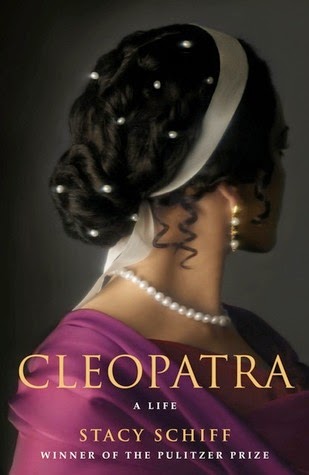
Cleopatra: A Life by Stacy Schiff

I tremendously enjoyed participating in Nonfiction November for the first time this year. I realized at the start of the month that I had read very few nonfiction titles this year. Fortunately, I didn't have many specific review commitments or blog tours, etc, planned for the month, and so I was able to turn my attention to some free-range reading in nonfiction. It was a delight to read five fascinating nonfiction titles this month, and the experience has reminded me that I want to weave more nonfiction books into my reading throughout the year. On my list as my next nonfiction title: In the Kingdom of Ice: The Grand and Terrible Polar Voyage of the USS Jeannette by Hampton Sides. I was delighted to receive this book in the mail from Katie at Doing Dewey, as part of the Nonfiction Book Swap hosted by An Armchair by the Sea. I am looking forward to reading it by a nice warm fire! I am NOT a fan of cold weather, but great books and warm cider by the fire get me through the season!

In the past week and a half, I've started to focus my attention on some of the most glowingly reviewed novels of 2014 that I have not yet read. I am hoping to read a few more of this year's stand-out fiction releases before I start to think about preparing my Best of 2014 list. Are there any 2014 releases that you want to read before the year is out?

I am looking forward to more free-range reading in December. What will you be reading during the final month of 2014?

Wednesday, November 19, 2014

Nonfiction November: Readalong Discussion for Cleopatra: A Life by Stacey Schiff

Today is Readalong Day for Nonfiction November! Becca at I'm Lost in Books is hosting the readalong discussion today of Stacey Schiff's 2010 book Cleopatra: A Life. This morning she posted a terrific conversation about the book with Katie from Doing Dewey. You can see that discussion post right here. Becca and Katie, I loved reading your conversation! It felt like listening to two friends at a book club meeting.

Ok, Becca and Katie posted a few discussion questions about Cleopatra . . . I'm going to answer a few of these with my thoughts about the book.

What did you think of the book overall?

Overall, I enjoyed reading it. Truthfully, I usually steer away from biographies, so reading this book was a little out of the box for me.

And I liked it, for the most part. But I did think, as Becca said, that it was very dense. At times I felt overloaded with information--and not always information about Cleopatra herself. Schiff includes a great deal about Roman politics here. And I realize, it's critical to understand Egypt's precarious position with respect to Rome in order to fully understand the central issues of Cleopatra's life. But . . . well, sometimes I felt that Schiff included too much information about events, people, politics, etc, that didn't really shed much light on Cleopatra herself.

And that kind of leads me to the issue of sources . . . there is so LITTLE known about Cleopatra herself, and pretty much NONE of it comes from Cleopatra herself or her close contemporaries. Schiff--or anyone writing about Cleopatra--is stuck with a few Roman sources written much after her death. It just made me wonder if there was really enough material about Cleopatra herself for Schiff to craft a full and convincing biography. That's why, I think, the book seemed often to me to be less a biography than a political history of Egypt's fall to Rome.

Cleopatra, despite her many achievements, is mainly remembered as a manipulative seductress while Caesar is remembered historically as a strategic ruler. What do you think about this distinction?

Well, that I'm not surprised. Men throughout history have been afraid of powerful women, and have painted them as manipulative and overly sexual. Schiff makes clear that Cleopatra was no more "wicked" than any of the male rulers from her time period. Sure, she had her siblings murdered, but apparently that was normal for the monarchs of her dynasty!

And of course it's ridiculous that Cleopatra is seen as the seductress, when, Schiff argues, she was likely a virgin when she first met Julius Caesar. Caesar was a fully grown man with a well-known reputation as a ladies' man, and yet the young virgin is the seductress? Cleopatra is blamed for driving Marc Antony crazy with her sexual wiles, as well, as if Antony (a handsome guy who'd long been considered a playboy in Rome) couldn't defend himself against her. Antony and Cleopatra had a relationship of over a decade and had three children together; they weren't officially wed, that we know of, but that sounds more like a marriage than a wanton seduction to me.

So it's odd that Cleopatra would be known throughout history as the manipulative seductress . . . but unfortunately not surprising, given that her history was written by Roman men. As Schiff demonstrates, it suited the purposes of Octavian Caesar to encourage a tabloid version of Cleopatra after her death, to depict her as "insatiable, treacherous, bloodthirsty, power-crazed." This enhanced Octavian's glory in defeating her and his brother-in-law Marc Antony, and ensured that their reputations were completely besmirched so that no one would challenge him in their name. This propaganda version of Cleopatra as evil and sexually promiscuous became the storyline that was passed down through the centuries. History, as they say, is written by the victors.

Were you surprised by anything in the book? Anything you didn't know that jumped out at you?

I had not realized that women had so many rights in ancient Egypt. Egyptian women had far more rights than Roman women, in fact. Egyptian women could own property and control their own marriages and divorces. Schiff writes, "Romans marveled that in Egypt female children were not left to die; a Roman was obligated to raise only his first-born daughter." Yikes! At the end of the book, Schiff argues that Roman fascination with Cleopatra caused a golden age for women in Rome. After Cleopatra's death, Schiff says, well-born Roman women--mainly the wives and sisters of Roman leaders--enjoyed a new role in public life that they had not before. I can't really assess whether this is true or not, as Schiff doesn't provide a lot of detail on this point, but I do think it is interesting and worth reading more about.

I've enjoyed participating in this readalong and in Nonfiction November all month long! I look forward to reading other perspectives on Cleopatra.

Thanks so much to Becca and Katie for hosting the discussion!

Mid-Week Update

Good morning, readers! This mid-week update meme is hosted by Miz B at Should be Reading. I haven't posted on my blog for a few days; this has been one of THOSE weeks, and the days have really gotten away from me. I HAVE been reading, though, so I thought I'd share what I've been up to . . .

What are you currently reading?

I have just picked up this book from the library, and started the first few pages . . .

Celeste Ng's novel Everything I Never Told You has received some stellar reviews. I realized it was one of those new releases in literary fiction that I should have read but didn't . . . well, there is time to rectify that before the end of the year! Are there any 2014 releases that you want to make sure to read before the end of the year?

What did you recently finish reading?

I have been participating in Nonfiction November, so I've been cruising through a number of great nonfiction titles this month. I haven't been able to post a nonfiction review or discussion piece yet this week. But here are the two nonfiction books I most recently finished:

Carl Hoffman's Savage Harvest offers a fascinating look at the still-unsolved 1961 disappearance of Michael Rockefeller in Papua New Guinea. I read Stacy Schiff's biography, Cleopatra: A Life, in order to participate in the Nonfiction November read-a-long, to be hosted today by Becca at I'm Lost in Books.

What do you think you’ll read next?

That's a good question! I certainly have a list of great nonfiction titles from Nonfiction November, and I have a few of those books on hold at the library. But it might be time for me to return to fiction . . . there are several 2014 novels that I would like to read. So . . . what to read, when there are so many wonderful choices? I'm not sure, but it's a good problem to have.

How is your week in reading going? I hope it has been a good one!

Friday, November 14, 2014

Nonfiction Reads and Bookish Outings for Book Clubs

As part of my involvement in Nonfiction November this month, I am encouraging one of my book clubs to consider a nonfiction book as our next reading selection. The members of this particular book club greatly enjoy planning some kind of activity, guest speaker, or outing to go along with the book that we read. We have had guest speakers such as a local author attend our meetings, for example. When we read The Aviator's Wife by Melanie Benjamin, we attended a panel of speakers about the Lindbergh trial, and a few of us even toured the Lindbergh estate (you can see a blog post I wrote about that here).

So I decided to do a little thinking about what nonfiction books my club might read that would lend themselves easily to some kind of outing. We are fortunate enough to live within driving distance of both Philadelphia and New York City; the combination of those great cities gives us a lot of options, if we are willing to take an all-day trip on the weekend. I thought I would share some of my ideas with you, and ask if you had any other suggestions. Although you may not live anywhere near me, you might be able to plan a similar kind of trip in your area to go along with these same books.

Here, then, are a couple ideas for nonfiction books and activities/outings to go with them:

The Boys in the Boat by Daniel James Brown. This book tells the story of the 1936 American rowing team that competed in the Berlin Olympics, the games controlled by the Nazis. OUTING: Rowing! There are several local dragonboat teams and other rowing groups in our area, including all female teams, who row on the river near our home. Perhaps we will contact one of those teams and give rowing a try! Of course, this outing would be better suited for spring or summer. As an alternative, we could take a walk around beautiful Boathouse Row in Philadelphia, where there are historic clubhouses belonging to rowing teams that have been participating in the sport for over a century.

Savage Harvest: A Tale of Cannibals, Colonialism, and Michael Rockefeller's Tragic Quest for Primitive Art by Carl Hoffman. This book considers the disappearance of Michael Rockefeller, the 23-year-old son of the Governor of NY and one of THE Rockefellers, back in 1961 in Papua New Guinea. The case was never solved, and the author seeks to determine if there is truth to the rumors that native tribesmen found him and... well, ate him. I am reading it now, and it's fascinating! OUTING: The Metropolitan Museum of Art in NYC has all the native art that Michael Rockefeller found before he died. I've been to the Met a number of times, but I don't think I've ever seen the exhibit of Asmat art. Now that I'm reading the book, of course, I am very anxious to see it!

Lives in Ruins: Archeologists and the Seductive Lure of Human Rubble by Marilyn Johnson. This new book, just released this week to very good reviews, is all about archeologists ("the real life avatars of Indiana Jones") and what they do. OUTING: We could take a field trip to the University of Pennsylvania Museum of Archeology and Anthropology. The Penn Museum, as it is commonly called, has one of the finest collections of Egyptian artifacts in the world, and collections of archaeological finds from all over the globe. As an alternative, we could invite a real-life archeologist to talk to us, and hear his or her perspective on the book and whether or not it accurately reflects their field.

Empty Mansions: The Mysterious Life of Huguette Clark and the Spending of a Great American Fortune by Bill Dedman and Paul Clark Newell Jr. This book offers the tale of a reclusive and eccentric heiress, the daughter of one of the Gilded Age industrialists, and the mysterious way she spent all of her fortune before she died. One of her many homes--the "empty mansions" which had sat unused for decades--made the news this summer when it was sold for $14 million in Connecticut (far under the value of what it is probably worth). OUTING: Perhaps we could take a field trip to 5th Avenue, where Huguette Clark once owned a lavish home, for lunch and shopping, just to pretend we are heiresses. Closer to home, Duke Farms, the estate of Doris Duke (another insanely wealthy heiress from the early 20th Century) is now open to the public as a park and gardens.

Dr. Mutter's Marvels: A True Tale of Intrigue and Innovation at the Dawn of Modern Medicine by Cristin O'Keefe Aptowicz. This newly published book is a biography of Dr. Thomas Mutter from Philadelphia, who helped to revolutionize surgery in America, back when the doctors used to perform it without anesthesia and without even washing their hands. OUTING: A visit to the Mutter Museum of Medical Oddities in Philadelphia, which houses the real Dr Mutter's specimens and collections. I have been there before, and it's very interesting, although not, I warn, for the squeamish!

I don't know if my book club will select any of these titles; it is still under discussion. But it certainly is fun to make "field trip planning" a part of book selection. And I can tell you that I WILL be making a pilgrimage to the Rockefeller wing of the Met soon!

Does your book club ever plan special activities or outings to go along with the books you read? If so, what kinds of activities and outings have you planned? What kind would you love to participate in?

Tuesday, November 11, 2014

Nonfiction November: Memoirs by Iranian and Iranian-American Women

The topic of Week 2 of Nonfiction November is Be/Become/Ask the Expert, hosted by Leslie at Regular Rumination. For this topic, participants are invited to share a list of titles that they have read on a particular topic, create a wish list of titles that they'd like to read on a particular topic, or ask fellow Nonfiction November participants for suggestions on a particular topic.

The topic I've chosen to tackle is Memoirs by Iranian and Iranian-American Women--Beyond Persepolis. First of all, let me note that I would never call myself an "expert" in this topic. I became interested in reading more nonfiction and memoirs by Iranian women after I read Marjane Satrapi's phenomenal graphic memoir, The Complete Persepolis. When I finished Satrapi's book, I wanted more . . . and so I read additional titles by women from Iran. There are still more that I would like to read. An expert, I most certainly am not--but I'd like to share a few words about these titles with you.

The place to start with memoirs by Iranian or Iranian-American women, in my opinion, is The Complete Persepolis by Marjane Satrapi. Satrapi's unique memoir-in-comic strips was first published in France in two volumes in 2000 and 2001, originally as Persepolis I and Persepolis II. Now you can buy them in one combined volume, and believe me, you won't want to read part I without going on to part II. Satrapi's clever, edgy, and sometimes hilarious memoir details her experiences growing up in Tehran during the Islamic Revolution. The daughter of well-educated and progressive parents, Satrapi was only ten years old at the time of the fundamentalist revolution, and of course it turned her world upside-down. It's no exaggeration to say I couldn't put this book down; as I read it, the story inhabited my dreams.

Nahid Rachlin's Persian Girls: A Memoir, published in 2006, is another story of coming of age in Iran, but quite different than Satrapi's. Rachlin and her sister Pari, growing up during the reign of the last Shah, hoped to leave the repressive, male-domininated society of their birth behind and live out their dreams of becoming a writer and an actress in the West. Only Rachlin managed to escape the weight of family expectations, however; she compares her own story with that of Pari, who is forced by their father to marry a cruel and wealthy man in Iran. As you might expect, Rachlin's fate contrasts sharply with that of her sister. Persian Girls is a poignant and compelling memoir. Rachlin has also published several novels, including Jumping Over Fire and The Heart's Desire.

Lipstick Jihad: A Memoir of Growing Up Iranian in America and American in Iran is Azadeh Moaveni's interesting account of her identity and experiences as an Iranian-American. Moaveni grew up in California, the daughter of Iranian exiles. Although she appeared to be a typical California girl on the outside, inside she felt the pull of the country of her parents' birth. After college, Moaveni moved to Iran to work as a journalist. In this book, published in 2005, Moaveni searches for her own identity, as a citizen of two very different societies. She also reports on the rebellious younger generation of Iranians, who chafe against the restrictions of the Islamic Republic. I enjoyed reading Lipstick Jihad, but I often felt that, in this book, Moaveni was torn between writing a personal memoir and a journalistic account. The book is a bit of both, and they don't always mesh together seamlessly. Moaveni has also written Honeymoon in Tehran: Two Years of Love and Danger in Iran about her marriage to an Iranian man.

Funny in Farsi: A Memoir of Growing Up Iranian in America by Firoozeh Dumas, published in 2003, is a collection of short essays describing the author's childhood as an Iranian immigrant in California. This is a sweet, quick read, with an emphasis on the cultural confusion of recent immigrants and the absurd lack of knowledge of Iran or Persian culture by most Americans. I was especially amused by the author's struggles with her hard-to-pronounce (for Americans) Persian first name, and how she learned to answer to "anything beginning with F." I can relate--my first name is also Persian, and I've often said that I have to answer to anything beginning with L! I found this book to be a very pleasant read, although at times I wished Dumas had left humor behind and explored some of her themes more deeply. For example, she provides fascinating hints of what it was like to be an Iranian immigrant in America DURING the hostage crisis, when anti-Iranian prejudice in America was at a high point, and I felt this issue could have been developed further. Dumas is also the author of Laughing Without An Accent: Adventures of an Iranian-American, at Home and Abroad, which I would like to read.

Reading Lolita in Tehran: A Memoir in Books is Azar Nafisi's account of teaching seven bright female students in her Tehran home in the 1990s. Nafisi, a former professor at the University of Tehran, met weekly with this group for two years to discuss forbidden classics by Western authors such as Nabokov, Fitzgerald, and Austen. I must confess that I have not yet read this book. I am including it in my list because it is probably one of the most well-known (in America, in any case) nonfiction books by an Iranian woman. I am interested in the perspective of any of you who have read the book. I know that reactions among some of my book-loving friends have been mixed, but I suspect it is a must-read for me as someone interested in women's experiences in Iran. Nafisi has also written a memoir of her childhood and family in Iran called Things I've Been Silent About: Memories, which sounds like a book that I'd like to explore. Nafisi's most recent book, The Republic of Imagination: America in Three Books, an exploration of three classic works of American fiction, was released last month.

The above books are some important nonfiction titles written by Iranian or Iranian-American women, but I don't want to imply that I am the absolute expert on this topic. I'd love to hear other suggestions, and I welcome your comments. I look forward to reading other posts this week from participants in Nonfiction November.

Do you enjoy reading memoirs or other nonfiction titles about life in other countries? What country would like to read more about?

Wednesday, November 5, 2014

Nonfiction November: My Year in Nonfiction

It's the first week of Nonfiction November! This is a project to celebrate great nonfiction books and to encourage book lovers to read nonfiction during the month of November, co-hosted by Kim at Sophisticated Dorkiness, Katie at Doing Dewey, and Becca at I'm Lost in Books. I hemmed and hawed about participating, but you know what . . . I've already been commenting on other blogs about this, so I'm kinda involved. I might as well officially participate and link something to the Week 1 topic. Ok, so here goes . . .

What was your favorite nonfiction read of the year?

I have been commenting all over the blogosphere that I only read ONE single, solitary nonfiction book this year . . . but looking back over my Goodreads account (good thing for that), I did read a few others. Um, whew. It turns out I read a whopping FOUR nonfiction books so far this year. I know, I know--you are blown away!! I will pause and let you recover.

Alright, so my favorite nonfiction read of this year, out of that overwhelming and impressive number, is the one I have just completed ....

And that would be Suki Kim's memoir of her year teaching in North Korea, Without You, There Is No Us. I just posted my review of this book yesterday, which you can find right here.

What nonfiction book have you recommended the most?

The nonfiction book I've recommended most over the past few years is probably Laura Hillenbrand's Unbroken--although I think everyone in the entire world has read it now, so I can stop recommending it! Hooray, my work is done.

What is one topic or type of nonfiction you haven't read enough of yet?

I'd like to read more nonfiction about topics I don't know as much about--science, for example. The Immortal Life of Henrietta Lacks by Rebecca Skloot is a great example of a nonfiction book about science that allowed me, as a non-scientist, to learn something new and push me out of my comfort zone as a reader. I'd love to hear some recommendations for other science books that I might try. I've heard many great things about On Immunity: An Inoculation by Eula Biss, so that ought to go on my list.

What are you hoping to get out of participating in Nonfiction November?

Well, primarily, to read a few more nonfiction books! Although I mostly read novels now, for pleasure and entertainment, I used to read plenty of academic history books. My degrees are in history, and long ago, in a galaxy far, far away, I taught American history at the college level. I still enjoy reading history, but sometimes I have issues with history books written for popular audiences that aren't adequately researched or sourced, or that include too much speculation or conjecture (it's hard to let go of that professional training! No joke--it's like a curse).

Right now, I am reading Avi Steinberg's The Lost Book of Mormon: A Journey Through the Mythic Lands of Nephi, Zarahemla, and Kansas City, Missouri. Steinberg, a non-Mormon, traveled to the landscapes associated with the Book of Mormon, searching for clues about the Mormon holy books, and makes an argument for considering the Book of Mormon as an influential work of American literature. It's about as quirky as it sounds, and so far I'm enjoying it.

Two other nonfiction books I'd like to read soon are Jenny Nordberg's The Underground Girls of Kabul and Lives in Ruins: Archeologists and the Seductive Lure of Human Rubble by Marilyn Johnson. I'm in the queue at my library for these, so we'll see when I can get my hands on them, but they both sound terrific.

Thanks to Kim, Katie, and Becca for organizing Nonfiction November! I will look forward to reading many interesting posts over the next few weeks, and adding to my Toppling Tower of TBR.

Monday, November 3, 2014

It's Monday, November 3 . . . What Are You Reading?

Good morning, readers. Hope everyone had a great Halloween! I'm posting again on this weekly bookish meme hosted by Sheila at Bookjourney.

Last week I posted reviews of these books:

The Book of Strange New Things is Michel Faber's new novel, just released last week. It's a really interesting, genre-bending mashup of literary and science fiction. You can see my review here. And Stone Mattress: Nine Tales is Margaret Atwood's new collection of short stories, published earlier this fall. Check out my review here.

Also last week, I posted my October 2014 Reading Wrap-Up. And I also posted some discussion questions on the novel Ghost Horse by Thomas H. McNeely, which I recently reviewed on this blog; you can read those discussion questions here.

Currently, I am reading this book . . .

I'm enjoying David Nicholls' new novel Us, the story of a man trying to keep his family together as they embark on a Grand Tour of Europe the summer after his son graduates from high school. It's very interesting, and somewhat different from what I expected . . . the jury's still out, but I'm glad I selected this as my next read.

Over the weekend, I started playing around with Edelweiss. I've been a bit intimidated by this site, but I knew that it was time for me to start using it, so I finally bit the bullet and registered. I've been learning how to browse the catalogues, tag books I'm interested in, and request review copies. I got help, thank goodness, from tutorials posted by Shannon at River City Reading and Monika at A Lovely Bookshelf on the Wall. I'm still learning the ropes, but I can see what a great resource Edelweiss can be for learning about upcoming titles. So, I'm just curious--are you registered on Edelweiss, and if so, do you find it helpful? Do you use it for information or requesting digital ARCs, or both?

Well, here is something kinda funny . . . I realized that I have passed a couple of milestones as a blogger: my 100th post and 6 months of blogging. I was so busy reading and blogging that I didn't really notice those milestones go by; I think I was supposed to celebrate them! Well, um . . . Hooray! I am still learning as I go, and I know that I have so much I can still improve upon . . . but it's been a lot of fun, and I'll keep plugging away. I love the community of fellow book lovers I've discovered, and I'm becoming aware of so many wonderful books through blogging (more, now, than I can possibly read!). I really appreciate all the support I've received from others in the blogging community. As always, thanks so much for reading this blog and for your comments!

What's on your reading agenda for this week?

Thursday, October 30, 2014

Some Discussion Questions on Ghost Horse by Thomas H. McNeely

Last week I posted a review of the novel Ghost Horse, by Thomas H. McNeely. Published this fall by a small, indie publishing house called Gival Press, Ghost Horse is a gripping and intense book about a young boy coming of age in 1970s Houston as his family falls apart. It is a compelling story that unsettled me at times, but I suspect will stay with me--and I recommended it for readers who love literary fiction and complex family stories. You can read my review here. I had the opportunity to read this novel through a blog tour at TLC Book Tours.

The author of Ghost Horse, Tom McNeely, was kind enough to stop by my blog and comment on my review. He left some discussion questions for readers of the novel, and I thought I would highlight them here. I do think that Ghost Horse would provide plenty of conversation topics for book clubs or reading groups, and I know from my own experience with book clubs that some thoughtful, guided questions can help generate deeper discussion among the group members. Here, then, are Tom's suggested questions:

Ghost Horse concerns a family in the 1970s which is breaking up in a divorce. How do you think divorce affects children in families? How do you think attitudes toward divorce have changed since the seventies? Do you think it is easier or harder for children of divorce now?

In Ghost Horse, three boys vie with each other to control a home-made movie that takes many shapes. How do you see children today using media to connect, and sometimes to harm each other, as in various cyber-bullying cases? Do you think children see themselves and their relationships differently because of their exposure to media today?

Ghost Horse explores the effects of class and racial tension in Houston, Texas, in the 1970s. How do you think attitudes toward race and class have changed in America since that time? Do you see a greater or lesser distance between races and classes now or then?

Thought-provoking questions, indeed, for a thought-provoking novel.

I'd like to add a few discussion questions of my own for readers of Ghost Horse. Here they are:

Children, of course, are greatly affected by their parents' attitudes towards other family members. They can overhear conversations they aren't meant to overhear, and misunderstand adult situations. As a parent, have you struggled with this? Have your children ever overheard a fight between you and your spouse, or a fight among other adult family members? Have you tried to temper your attitude toward other family members for the sake of your children?

On this same theme, children often mimic the actions of their parents. In Ghost Horse, do you think that both Buddy and Simon re-enact some of the actions of their fathers? How so?

What do you think Buddy will be like as an adult? How do you think the experiences related in the book will affect him as a father, if he chooses to have children? How can parents who have endured difficult childhoods leave those experiences behind in their own relationships with their children?

Please feel free to leave any comments, whether you've read Ghost Horse or not. And if you have read the novel, feel free to suggest additional discussion questions.

Monday, October 27, 2014

It's Monday, October 27 . . . What Are You Reading?

Good morning, fellow readers! This post connects to the "It's Monday" meme hosted by Sheila at BookJourney. I hope you've been enjoying a season of wonderful reads--I certainly have! As usual, the TBR pile threatens to topple over, but I've been reading along at a good, steady pace lately. Hooray--reading slumps, please stay away!

Last week on the blog, I posted reviews of these books:

Lila is Marilynne Robinson's latest novel, which has been longlisted for the National Book Award. It is a beautifully written, character-driven novel about a woman's journey from suffering and abandonment to love and redemption (the link to my review is in the title).

Ghost Horse by Thomas McNeely is a powerful novel, set in Houston in the 1970s, about a boy coming to terms with his parents' awful divorce. It's a coming-of-age story as well as a novel about adults behaving badly in the midst of a family crisis, and it is a moving book that will certainly stay with me. I read Ghost Horse as part of a blog tour for TLC Book Tours.

I also re-posted my review of this book:

Lily King was the recipient of the very first Kirkus Prize for Fiction, which was announced last week, for her novel Euphoria. I read and loved this book, about a love triangle of anthropologists in Papua New Guinea in the 1930s, when it was released over the summer. I didn't think Euphoria received the attention it deserved earlier this year, so I was very glad to see King win the Kirkus Prize. You can read my review of Euphoria here.

In the past week, I read these books:

Another Margaret Atwood! I don't tend to read a lot of short stories, but Stone Mattress is truly Atwood at her best, so if you are a fan, I recommend it. Review to come soon. I read Certainty by Victor Bevine for TLC Book Tours; I will host the tour on November 5th.

And currently, I am reading . . .

Reunion by Hannah Pittard looks to be a good, juicy story of family dysfunction; I'm always fond of those! It's starting off well--that's always a good sign.

This week I hope to get some reading done and even a few reviews posted, but I'll also be spending a few days in NYC with the family. We'll be seeing a Broadway show that the kids have been desperate to see, and spending some time at MoMA and in Central Park, if the weather cooperates. I love New York in the fall!

I wish everyone a great week in reading!